
by Paul Gouvard
, 14.07.26
With ESSEC Knowledge Editor-in-chief
Would you lose your head if you learned that Dr. Guillotin, an 18th century doctor and politician, was not in fact the inventor of the infamous guillotine? Despite the machine bearing his name, he had no material part in its creation. That credit belongs to one Dr. Antoine Louis - although it is likely you have never heard his name. How did the guillotine come to be attached to Dr. Guillotin? In a recent publication in the Academy of Management Journal, Paolo Aversa (King’s College London), Paul Gouvard, assistant professor of management at ESSEC Business School, and Maria A. Makarova (Catholic University of Milan) developed a model for the social attribution of innovations, using the guillotine as an example.
What’s in a name?
How does an innovation become inextricably attached to one particular inventor in our collective imagination? For instance, the invention of the telephone is attached to Alexander Graham Bell - but Elisha Gray filed a patent on the same day. There are other examples: Thomas Edison and the lightbulb, the smartphone and Steve Jobs, and of course, Dr. Joseph-Ignace Guillotin and the guillotine. Many inventions have several contributors, but often, only one lives on in our memories. Why, then, do certain inventions become linked to certain individuals, and by which social processes does this occur?
Why does attribution matter?
When centuries have passed since an invention, its inventors are long dead, and the invention itself has fallen out of favor (like the guillotine), why does attribution even matter? This helps us understand modern society and how an innovation comes to be recognized as such, rather than just as a simple solution to a problem.
Dr. Guillotin: how did a humanist doctor become synonymous with death?
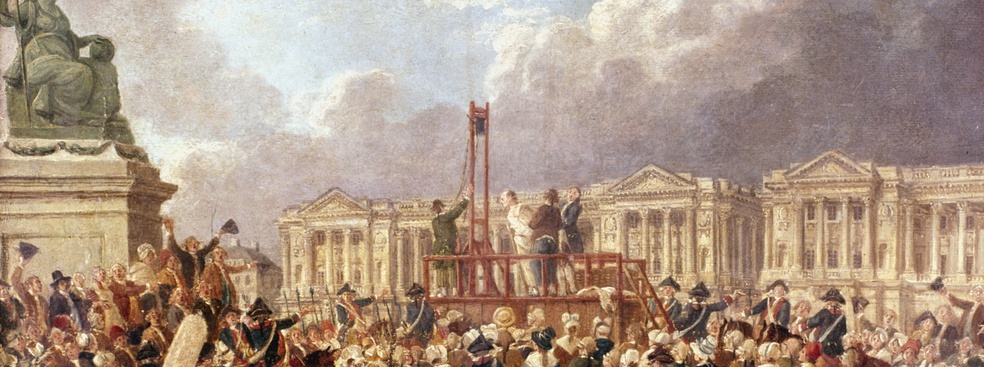
Joseph-Ignace Guillotin was a doctor, politician, and humanist who became known during the French revolution for an invention he had virtually no hand in creating, though it still carries his moniker. Dr. Guillotin’s main role was his proposal that France employ a beheading machine for capital punishment in 1789. He argued that it was important to have an egalitarian and humane method for capital punishment. At this time, the guillotine as it would become did not even exist, and Dr. Guillotin was not involved in its eventual creation.
But how did his name become attached, when its creator, the aforementioned Dr. Louis, was no secret? The researchers used a historical approach to explore this process. They collected three categories of sources, focusing on the period between Dr. Guillotin’s proposal on October 9th, 1789, and the first guillotine execution on April 25th, 1792.
-
Research by reputable historians on revolutionary Paris and the French and international press of the era. This included documents on penal law reform and the guillotine’s conception.
-
Archival documents from the French Revolution, from France’s archives and contemporary letters.
-
Public reception of the guillotine, as discussed by the French and British press of the time
Since it came out during a dawning modern era, it was widely discussed in an emerging public way: letters, formal reports, and news reports, in a way that few inventions had previously been scrutinized. With the French Revolution making a global impression, the guillotine became a key symbol alongside the slogan Liberté, égalité, fraternité.
At the time that Dr. Guillotin made his proposal, penal law reform was being widely discussed all over Europe. Major thinkers of the Enlightenment called out judicial systems for their cruelty, and capital punishment became a flashpoint. Voltaire wrote about the cruelty and injustice of France’s penal system, but more conservative figures claimed that cruelty was the point, a necessary deterrent to crime and crucial for social order. At the time, the wealthy and privileged also enjoyed more lenient punishments than the poor and downtrodden. The manner of carrying out the death penalty therefore depended on your social status. This led to over 200 debates in the National Assembly on justice reform during the Revolution, and 1177 press articles.
It was in this context that Dr. Guillotin was elected a deputy. He was a respected professor at the Paris Faculty and was part of the commission appointed by Louis XVI to discredit Messmer (which also included Benjamin Franklin). He further was a prominent intellectual and discussed political issues in the public sphere, becoming a popular if polarizing figure. French commoners (the Third Estate) saw him as a hero, since he sponsored a petition arguing that they deserved political representation just like the aristocracy and the clergy; royalists saw him as a threat and criticized him in the royalist press.
Not only did Dr. Guillotin not invent the guillotine: he actually opposed the death penalty initially. Cognizant as he was that this opinion would not be well-received, he pivoted towards a proposal for a more human and egalitarian method of capital punishment. His bill also indicated that the person’s family should have the right to their body, that they be free from retribution, and that the deceased's property should not be confiscated. In short, he wanted a less cruel and more equal system. As one might expect, this was a polarizing proposal. A widely-read Royalist periodical attributed the invention of the decapitating machine to the doctor, even though the actual guillotine did not exist at the time and that such machines had been used elsewhere in Europe for centuries, also publishing the first use of the word “guillotine” in a satiric song.
The proposal made waves in the press and public discussion among both royalists and revolutionaries, but did not immediately catch on. Dr. Guillotin had no further involvement after his proposal, but by tying it to the penal reform debate’s key dimensions of cruelty and unequal punishment, it became a symbol.
The rest, as they say, was history, although the dubious “credit” for the guillotine could plausibly be shared amongst five key figures:
-
The unfortunate Dr. Guillotin
-
The Count of Mirabeau, a leading revolutionary and advocate for the guillotine’s usage. The same royalist periodical also suggested that the device be named after Mirabeau - a suggestion that did not catch on. He died in 1791, and his role faded.
-
Dr. Louis, the true designer of the device. Initial press made frequent reference to Dr. Louis - and he mentioned his distaste for an article wherein the device was nicknamed Petite-Louison after him, referring to it as the guillotine himself. He also tried to distance himself - and he died in May 1792, shortly after the first guillotine execution, probably contributing to the fact that his name did not catch on. Indeed, press mentions to Dr. Louis slowed after his death, with attention refocusing on Dr. Guillotin.
-
Tobias Schmidt, a piano-maker by profession, who manufactured the guillotine after making musical instruments for Dr. Louis. Schmidt was less reluctant to be associated with the guillotine, even filing a patent for it that was ultimately rejected. Since he was a craftsman, rather than a respected doctor or intellectual, he was dismissed despite himself.
-
Charles-Henri Sanson, the Paris executioner and the lead user of the guillotine. Sanson also saw the need for a more efficient, effective device, as the previous devices were inhumane for executioners and executed alike. Even this, however, was not enough to displace Dr. Guillotin as the key figure associated with the guillotine.
While it was designed to be more humane and less painful, those same qualities also made it a state-sponsored tool of extensive bloodshed. Ultimately, the guillotine’s brutal efficiency facilitated the Reign of Terror during the French revolution, leading to the deaths of between 15,000 and 17,000 people. This meant its reputation was soaked in blood.
The hapless Dr. Guillotin tried to distance himself from the machine, since its later use for mass terror went against his humanist principles. His name was barely mentioned in the press after his initial proposal - but by 1791, the term “guillotine” was solidly established. The damage was done, and over three hundred years later, he is still tied to the beheading machine.
How do perceptions shape innovations?
Using the case of Dr. Guillotin, the team of researchers created a process model to understand the link between innovators and inventions. The steps are as follows:
-
The audience identifies an individual who has contributed to a given solution
-
They then evaluate the status of the individual to see if they meet the criteria for consideration (here, Schmidt was filtered out by 18th century audiences)
-
They map the individual against “value-laden problem dimensions”, such as the cruelty and inequality of the penal system in the case of the guillotine, to add context to the individual’s contribution. Here, Dr. Guillotin and Dr. Louis were associated with humanism and equality, aligned with Enlightenment ideals, whereas Sanson was associated with practicality. When the associations are seen as more valuable and coherent, as is the case for Dr. Guillotin, they are more likely to hold. Less coherent or valuable associations, like for Sanson, are less likely to take hold.
-
Then, the audience assesses the invention through the role of the contributor. French revolutionaries likely initially saw the machine as more egalitarian and Dr. Guillotin’s proposal as part of a quest for justice, whereas royalists likely saw it as dangerous since it went against their value judgments.
-
Next, audiences attribute the solution to the focal contributor - regardless of whether their role was a defining one. This helps audiences make sense of the invention. When the invention is named after the contributor, this further cements the contributor’s role - although not all innovations are named after a particular person.
-
The audience then evaluates the focal contributor based on the innovation in question. This can shift as public opinion evolves. Dr. Guillotin, initially seen as a respected doctor, became seen as a ruthless, even blood-thirsty figure.
-
These steps can spiral, leading the association to go unquestioned even if factually inaccurate. It can also mean that the contributor’s motives and intentions are falsely interpreted, like in the case of Dr. Guillotin.
Factors that shape this social process
-
The link between the problem dimensions and the contributors’ motives: the closer a contributor’s role is to the problem dimensions, the more likely it is that their role will crystallize
-
Evidence of change: as the innovation changes society, this can shift how audiences evaluate innovation and “innovator” alike
-
Audience bias: We want either a hero or a scapegoat - and our desire to find this person makes us even more eager to attribute an invention to an inventor.
Why does this matter?
With this work, Dr. Aversa, Gouvard and Makarova deepen our understanding of the link between innovations and innovators, and just how this link becomes durable enough to stand the test of time. In this, they developed the first process model of the social attribution of innovation, which pinpoints the critical role of public perception. It also demonstrates that this process is progressive and creates a positive feedback loop over time. Innovators don’t just create their invention - their invention can also create a public image that may or may not be what they intended. Their work also shows that “misattributed” inventions are not merely a case of inaccurate historical record, but rather driven by people trying to make sense of major changes to their society. This can also be used or misused by political actors to discredit adversaries, as once an attribution enters the collective imagination, it takes root and is resistant to change.
Attribution is not just about who gets credit for what - as this piece shows, it can shape history.
Further reading
Aversa, P., Gouvard, P., & Makarova, M. A. (in press). The social attribution of innovation: Uncovering the heads behind the guillotine. Academy Of Management Journal, https://doi.org/10.5465/amj.2024.0314