
by ESSEC Knowledge Editor-in-chief
, 19.12.25
As the year draws to a close, it’s time to highlight the ESSEC professors who received major grants in 2025! Four ESSEC faculty members, from four different departments, received funding from the French National Research Agency this year. Read on to see what our professors are working on!
Projects are presented in alphabetical order by professor surname.
Marie-Léandre Gomez, HOPSIS - Hospitals' medical organization and Preparation to crisis, ANR (2025-2028)
.jpg)
The HOPSIS project aims to enhance hospitals' organizational ability to address emerging multiple risks by understanding the new forms of threats and crises faced by hospitals, and by analysing the current organization and preparation for major crises. It will specifically focus on the resilience of medical activity and the professional role of Crisis Medical Directors (hereafter CMD). Hospitals increasingly face significant events that threaten their structures, infrastructures, and the lives of employees and patients, while also managing exogenous crises such as a massive influx of patients following a major disaster, and health crises like COVID-19. In the face of such complex and hybrid crises, response efforts require greater agility, and adaptability. The project intends to:
1. Examine the new threats faced by hospitals and assess their impact on medical organizations
2. Better understand the career paths and trajectories of CMDs, and grasp their impact on decision-making, coordination, and preparation and their place in the wider hospital and healthcare system
3. Propose new training, preparation, and learning methods that integrate the professional insights and experiences of CMDs.
HOPSIS brings together three research groups from various disciplines: management, sociology, philosophy, political science, geopolitics, as well as healthcare researchers and practitioners. The project uses quantitative and qualitative methods, including a qualitative case studies of hospitals and a survey on medical crisis directors.
About Marie-Léandre Gomez
Marie-Léandre Gomez is Associate Professor in the Accounting-Management Control Department at ESSEC. Her research focuses on learning dynamics and coordination during professional activities. Since 2019, her main research project is about the coordination of medical teams coordination in crisis situations. She leads the COMEXTresearch project partnering with la Sorbonne Université hospitals and ENS chair of geopolitics of risks.
Giordano Mion - Globalization, Labor Market and Developing Countries, ANR (2025-2029)

Over the past few decades, trade liberalization has played a central role in the structural reforms of developing countries. In recent times, considerable focus has shifted towards examining the microeconomic impacts of openness on labor markets and firms. The literature on the micro-economic effects of trade liberalization on labor markets have focused mainly on the formal manufacturing sector. This literature is not able to capture the impact of globalization on a large share of the labor force - almost half of economic activity - that is employed in the informal sector in the developing world. At the same time, the literature on firms and trade has so far largely neglected the key distinction between revenue productivity, i.e., the capacity of firms to generate revenue with a given amount of inputs and quantity productivity, i.e., the capacity of firms to generate physical output with a given amount of inputs. The project aims to contribute to filling these gaps.
About Giordano Mion
Giordano Mion is currently Professor of Economics at ESSEC Business School. His research and teaching focus on international trade, urban economics and applied econometrics.
Alain Naef - SUSFOODMARK - Capitalizing on Change : A Recipe for Sustainable Food Systems, ANR ORA (2025 - 2028)
.jpeg)
The scientific consensus is clear: the prevailing food system is unsustainable. It relies on the heavy use of fossil fuels, chemical pesticides and fertilizers, polluting ecosystems and contributing up to a quarter of global greenhouse gas emissions. It engages in large-scale monocultures and intensive livestock production, threatening biodiversity.
Given these threats, a sustainable transition of food systems is critical. How can we transform food systems in a way that nourishes both people and the planet? Our research aims to understand how publicly listed companies respond to pressures to transition toward sustainable food systems. Through capital markets, shareholders have a strong bearing on how large food and agriculture businesses operate. Yet, the role of capital markets is understudied in sustainable food transitions. Investors in publicly listed companies remain ambivalent: they provide capital that simultaneously enables sustainable innovation and environmentally damaging outcomes. We ask: how do capital markets help or hinder the transition towards sustainable food systems and how can publicly listed food and agriculture businesses be encouraged to take greater strides towards sustainable food systems? Two gaps in the academic literature motivate this inquiry: (1) the food systems literature is dominated by the narrative that financialization exacerbates unsustainability in the food system. However, scholars have called for moving beyond delineating the negative impacts of finance to identifying ways in which financiers can enable a sustainable food transition; (2) while research indicates patterns of corporate concentration in the food system, the structure of power of capital markets in financing the food system remains unclear. Through qualitative and quantitative methods, this project will clarify whether and how capital markets can disrupt the status quo to enable sustainable transitions in food systems. The aim is to tease out the relationship between capital and corporate power and uncover how capital markets can facilitate the shift towards sustainable food systems.
About Alain Naef
Alain Naef is assistant professor of economics at ESSEC Business School. His work explores climate finance, international macroeconomics and economic history.
Jeroen Rombouts - The econometrics of high-frequency shot-tenor options, ANR (2025-2029)
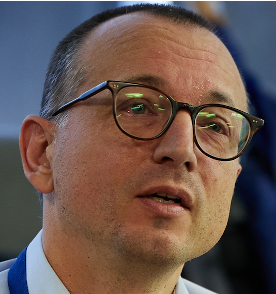
In recent years, technological innovations have significantly transformed financial markets, leading to a notable increase in both the frequency and diversity of market participation. This shift is evident not only in the speed of trade execution and in the maturity of traded instruments. Currently, the largest proportion of options traded on the CBOE are 0DTE (0-Days-To-Expiration) options, which have maturities of just a few hours, a great appeal for retail traders, and unknown externalities on financial markets. This surge of short-term options trading has provided financial econometricians with an unprecedented volume of new data, raising important research questions surrounding a classic topic: option pricing. Building on this development, this project aims to advance the frontier of econometric research in high-frequency econometrics by leveraging the wealth of new information available in the market. Options have demonstrated their capacity to provide precise forward-looking information, which can be invaluable for applications in econometrics, economics, and finance. Additionally, options are becoming increasingly accessible to small investors. Therefore, this project also aims to enhance the understanding of these instruments and reduce the information asymmetry between retail and professional traders.
About Jeroen Rombouts
Jeroen Rombouts has been a professor at ESSEC Business School since 2013. He is the Director of the Accenture Strategic Business Analytics Chair. He researches predictive analytics, in particular time series analysis and forecasting.