
by ESSEC Knowledge Editor-in-chief
, 16.06.26
Congratulations are in order for thirteen ESSEC researchers, who have recently received CY Initiative and CY Génération grants for exciting new projects! Read on for more information on what our researchers are working on:
CY Initiative
Horizon program: For large-scale research projects developed by a research center or team.
Safe Decisions via Adaptive Learning of Time Series
Pierre Alquier (principal investigator), Mikolaj Kasprzak, Kamelia Daudel, Guillaume Chevillon and Jamus Lim
Partners: Paul Doukhan (CYU-AGM), Lionel Truquet (ENSAI Rennes), Xiequan Fan (Northeastern University at Qinhuangdao), Nicolas Marie (Paris Nanterre University), Geoffrey Wolfer (Tokyo University of Agriculture and Technology), Daniel Paulin (NTU Singapore)
In economic and financial forecasting, algorithms designed for independent data are frequently deployed on temporal data without adaptation. While the theoretical performance of learning algorithms on independent data is now well-understood, a significant gap remains regarding time series. A statistical learning theory for dependent data has been developed, but risk control within this framework currently involves explicitly restrictive assumptions on the range of the dependence in the data through abstract, unobservable quantities such as mixing coefficients or spectral gaps. This is a real limitation for practical purposes: underestimating the dependence results in a large variance that will lead decision makers to underestimate risks. On the other hand, overestimating it is equally undesirable, as it leads to inefficient learning and excessive data requirements. The objective of this project is to systematically develop a learning theory for time series that enables risk control based on data-driven quantities, minimizing reliance on ad hoc assumptions. The project will start with Markov models: estimation of the spectral gap and the mixing time. We will then tackle the estimation of mixing and weak-dependence coefficients for more general processes.
About Pierre Alquier

Pierre Alquier is Professor at ESSEC Business School, in the Department of Information Systems, Data Analytics and Operations. His research focuses on the statistical and theoretical aspects of machine learning in general, with special focus on approximate Bayesian methods, high-dimensional models, robust learning and learning with dependent observations.
About Pierre Jacob
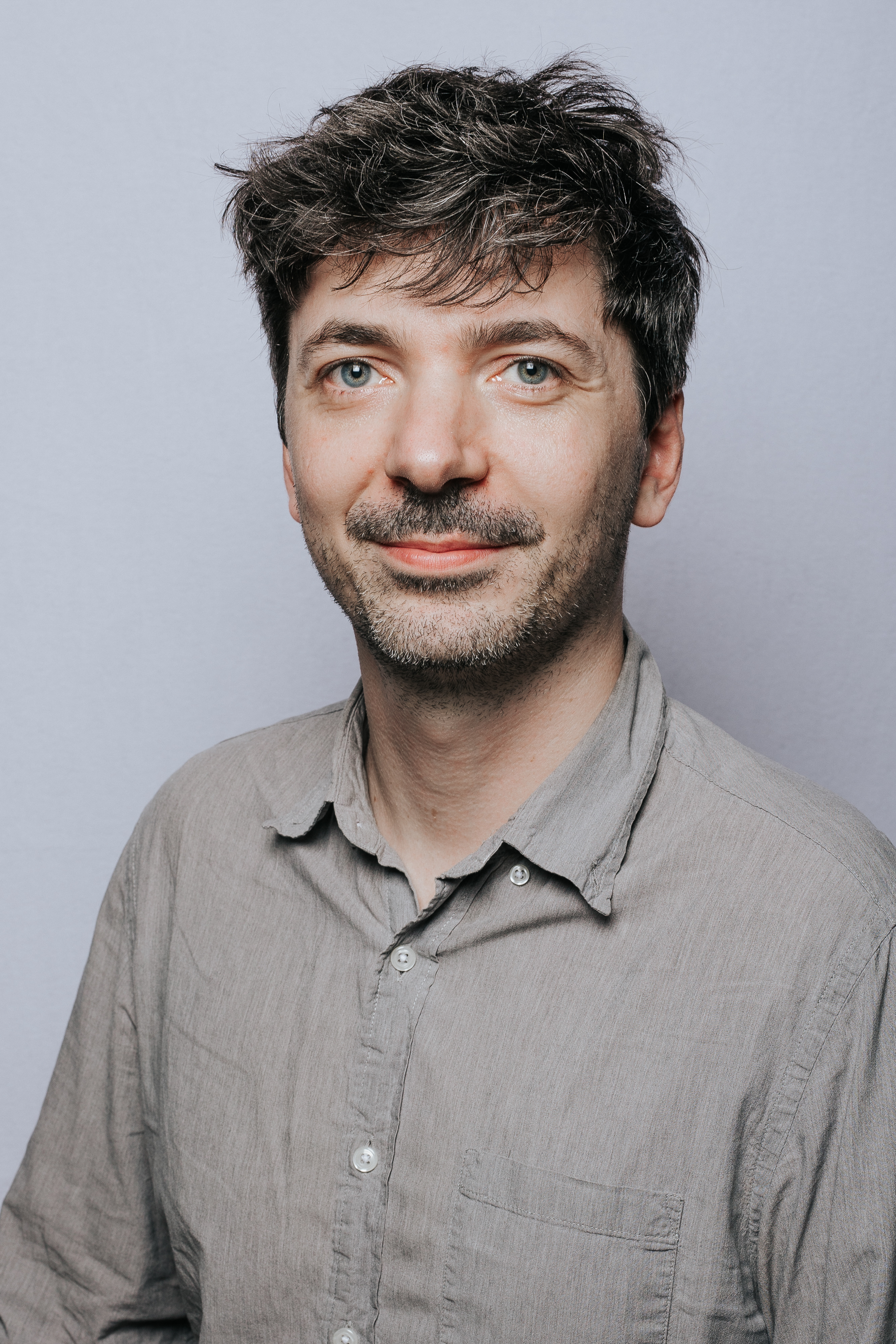
Pierre Jacob is Professor of Statistics at ESSEC Business School. He develops methods for statistical inference, time series analysis, Monte Carlo, methods to compare models or to estimate latent variables. Dr. Jacob received an ERC Consolidator Grant from the European Commission in 2025 and a CY Initiative Emergence Grant in 2024.
About Mikolaj Kasprzak
.jpg)
Mikołaj is an assistant professor, specializing in mathematical statistics and applied probability. He holds the “Data Science” Chair of Excellence (CY). Mikołaj is interested in providing rigorous quality guarantees for various approximations arising in applied probability, statistics and machine learning. Along the way, he develops new mathematical theories and tools for upper-bounding distances between probability distributions. He enjoys working on theoretical problems and proving new theorems which are motivated by real-life applications.
About Kamélia Daudel
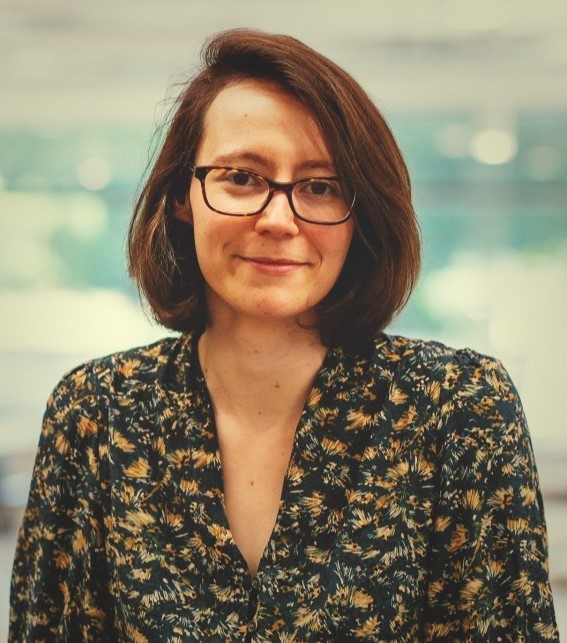
Dr. Daudel is Assistant Professor of Statistics. Her current research lies in the field of Approximate Inference. In particular, she is interested in Variational Inference methods which go beyond the commonly-used parametric variational distribution framework and which involve flexible families of divergence measures (e.g. the -divergence family).
About Guillaume Chevillon
_(2).jpg)
Guillaume Chevillon is Professor at and Academic Co-Director of the ESSEC Metalab for AI, Data & Society. He holds the ESSEC Chair in Cultural Industries, Arts & Creative Technologies. His field of research is econometric theory with applications to forecasting and statistical learning in economics and finance. Applications include monetary policy, business cycles, financial bubbles, energy forecasting and climate control.
About Jamus Lim

Jamus Lim is an associate professor of economics at ESSEC Business School. His research expertise and interests lie at the intersection of international macro-finance, political economy, and development economics.
Resilience to Strategies of Influence, Interference and Intimidation
Partners: Université de Montpellier, Université de Bucarest
Aurélien Colson (principal investigator), Frédéric Charillon, Angela Sutan, Radu Vranceanu, Maciej Workiewicz
The R‑S3i project (Resilience to Strategies of Influence, Interference and Intimidation) aims to strengthen the resilience of European democratic societies by developing an integrated and operational scientific understanding of such strategies, which are deployed by both state and non‑state actors to target information spaces, democratic institutions, economic actors and public opinion. The project combines interdisciplinary research (political science, economics, and social psychology) with a variety of methods (case studies, empirical analyses and modelling). The aim will be to better define the actors, practices, vectors, targets and effects of S3i; and, in turn, to remedy the vulnerabilities identified by proposing operational recommendations.
About Aurélien Colson
_(1).jpg)
Dr. Colson is Professor of Political Science at ESSEC Business School, where he is also co-academic director of the Institute for Geopolitics and Business, director of the IRENE Center for Negotiation & Mediation, founder and co-director of the Center for Geopolitics, Defense & Leadership. Dr. Colson teaches negotiation and geopolitics at ESSEC.
About Frédéric Charillon
.jpg)
Prof. Charillon is an associated researcher and Senior Advisor with ESSEC IRENE, specializing in defense and diplomacy. He is also the academic co-director of the ESSEC specialized track in Geopolitics, Defense and Leadership, Director of the Observatory on Strategies of Influence, Intimidation, and Interference (OS3i), and teaches courses on those topics at ESSEC. Frédéric Charillon is a University Professor of Political Science at Université Paris Cité. His research focuses on defense, foreign policy, strategies of influence and international relations.
About Angela Sutan
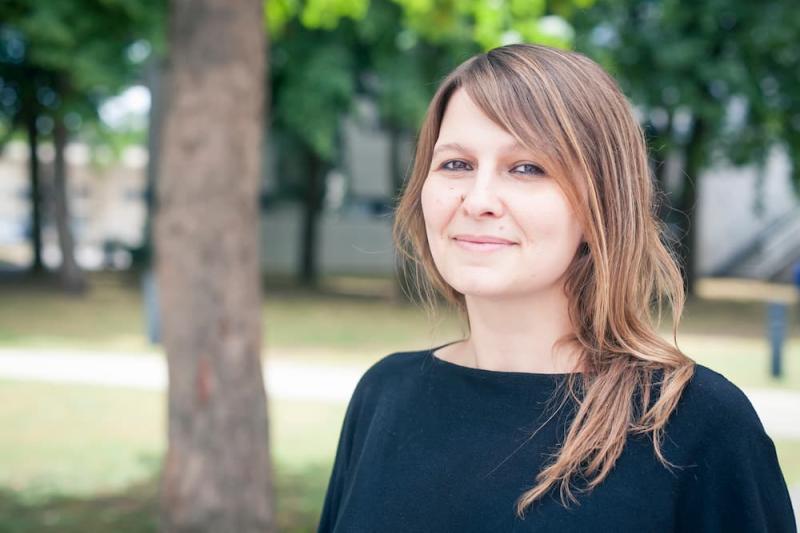
Dr. Sutan is Professor in Sustainability at the Law, Political Sciences and Society Department at ESSEC. She is the Scientific Director of the ESSEC Experimental Lab and the Academic Director of the Executive Master in Strategies for Sustainability. She uses behavioral and experimental economics tools in her research. Her research explores topics related to sustainability, (anti)social behavior and introspective level-k thinking.
About Radu Vranceanu
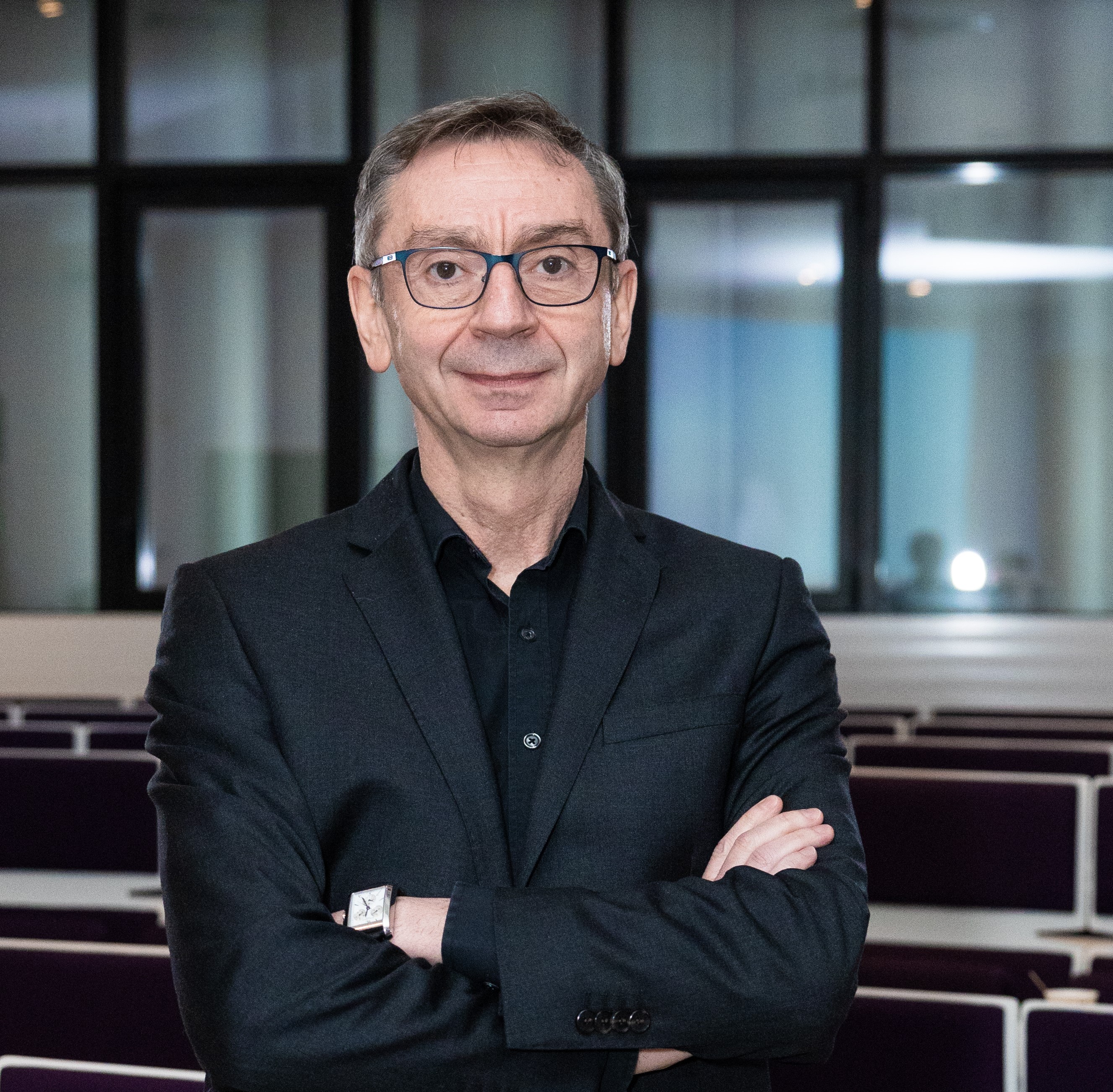
Radu Vranceanu is Professor of Economics at ESSEC Business School and a research fellow with THEMA (CNRS) research center. He has special expertise in the theory of expectations and the analysis of informational inefficiencies, which he has applied to various fields including financial and banking crises, monetary and public debt policies, research management, labor contracts, defense and health economics. He also contributes to research in experimental economics. He is the ESSEC representative for scientific integrity and Head of the Department of Economics.
About Maciej Workiewicz
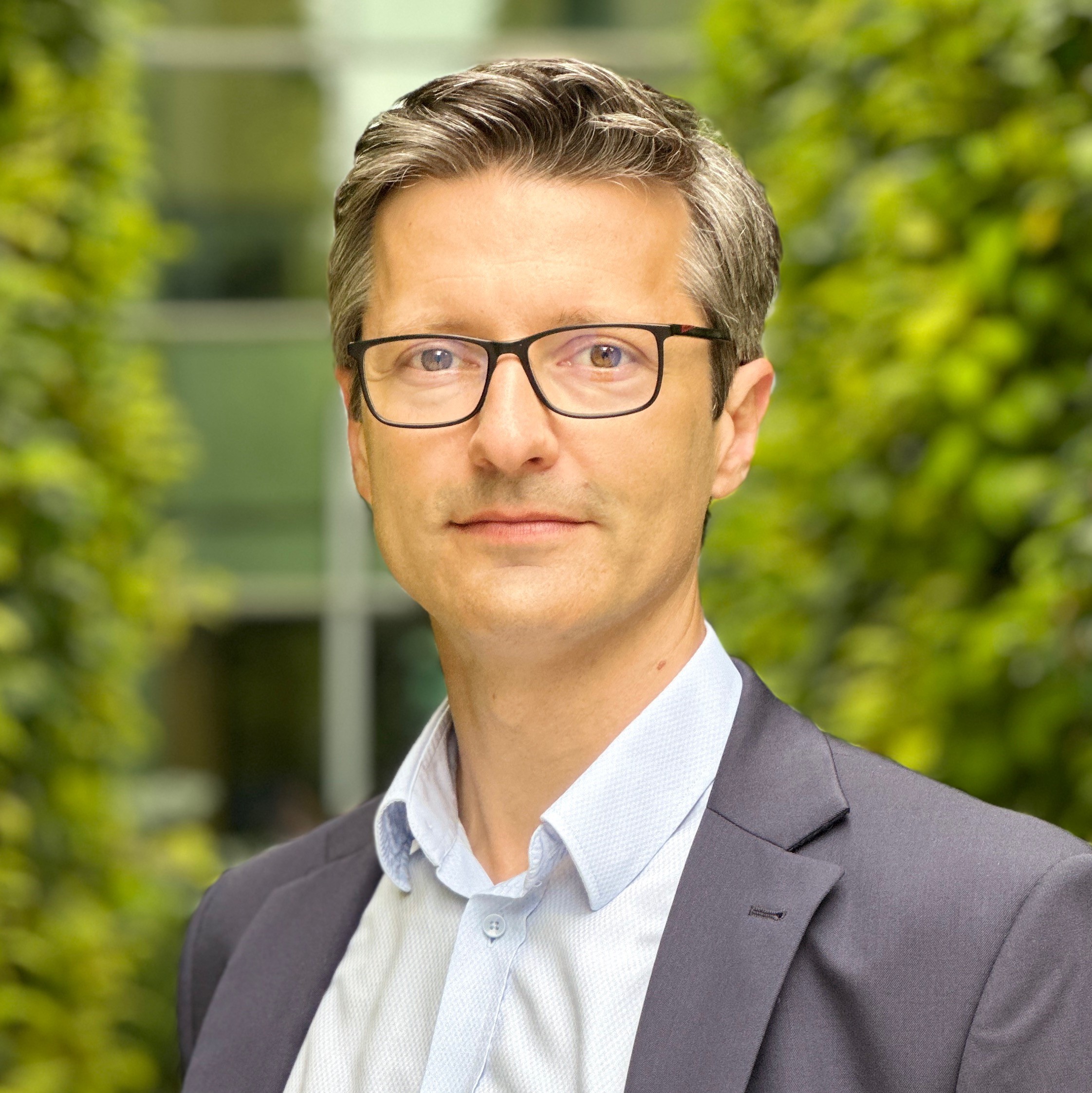
Maciej Workiewicz is Associate Professor of Management at ESSEC, where he teaches strategy, strategic management, and AI courses in the school's Masters in Management, GMBA, and Executive Programs as well as strategy, organization theory, computer simulation, and machine learning in the school's doctoral program. In his research he focuses on how organizational structure influences the way companies adapt to industry change and innovate.
Emergence program: Designed to support ambitious research projects led by individual researchers
Gender & entrepreneurial fundraising narratives
Isabelle Solal (principal investigator) and Ruthanne Huising
With this project, we investigate how men and women founders of high-growth startups make sense of the process of fundraising, their role in that process, and how fundraising serves to fulfill the needs of their fledgling firm. In particular, we ask whether gender differences exist in these conceptualizations. We theorize that differences in approaches to fundraising are likely to impact fundraising outcomes, independent of investor responses, thereby contributing to the gender gap in entrepreneurial financing. We will answer this question by taking a narrative approach, through an in-depth qualitative study of early stage entrepreneurs in France and Singapore.
About Isabelle Solal
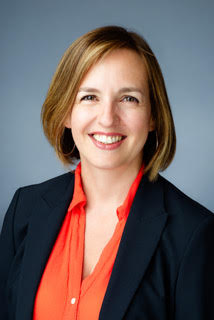
Dr. Solal is Assistant Professor in the Management Department at ESSEC Business School, where she teaches courses in Entrepreneurship and Organizational Behavior. Her research focuses on the mechanisms that lead to inequality in labor and financial markets. In particular, her work addresses the following questions: 1) how do audiences use gender to interpret ambiguous signals? 2) to what extent does gender influence career outcomes by shaping both actual and perceived preferences? and 3) how do organizational practices contribute to gendered work outcomes, including through unintended consequences of efforts to promote greater diversity? A secondary stream of research explores worker wellbeing, especially in the area of mental health. She uses archival data analysis and lab experiments to investigate these questions in contexts such as high-growth entrepreneurship, top level management, and scientific teams.
About Ruthanne Huising

Dr. Huising is Professor of Management at ESSEC Business School. Her research is motivated by the documented difficulty of achieving organizational compliance with regulations, standards, and other ethical and social expectations. To examine this problem, she studies the work and professions that are central in shaping how compliance is understood and practiced within and across organizations. Within organizations, she studies how prosocial demands are harmonized, translated, and implemented, analyzing issues of expertise and power. Across organizations, she examines governance processes, including the organized spaces in which stakeholders and members of designated professions interact to negotiate the meaning of organizational compliance and develop resources to facilitate organizational compliance.
CY Generation
This program is designed to support research projects that can help tackle social change and sustainability. It is piloted by CY Cergy-Paris University and ESSEC Business School.
The Forests We Import: How Global Food Trade Transforms Land Use (Project FORESTFLOW with THEMA)
Alain Naef
Research partners: Agustin Perez Barahona, Professor at CY Cergy Paris Université, Nina Lindstrøm Friggens, University of Exeter, Forrest Fleischman, University of Minnesota
The FORESTFLOW project investigates a paradox: how rich countries grow their forests, while importing food that generates deforestation. The increased forest cover in rich countries reduces their carbon footprint, while lower income countries like Brazil or Indonesia get blamed for deforestation. The takes a multidisciplinary approach, mixing the skills of a plant soul ecologist, qualitative sociologist and two quantitative economists (including Dr. Naef). Termed "imported reforestation," their core hypothesis is that these countries reduce domestic agricultural pressure by outsourcing land use to exporters, allowing their lands to revert to forest. This creates an illusion of domestic environmental progress, masking the global displacement of deforestation and land use impacts through trade. The project aims to quantify the causal link between food import growth and domestic forest recovery, measure the net displacement of land use embodied in trade, and assess how countries use their domestic forest growth in climate accounting and storytelling, including in international climate pledges. The project will explore the climate justice implications of current practices and produce policy-relevant indicators to align food trade, forest policy, and climate narratives.
About Alain Naef
.jpeg)
Dr. Naef is Assistant Professor of Economics at ESSEC Business School. He is the cofounder of sustainable macro. He was awarded the Best Green Finance Researcher under 40 Award by the Banque de France. His current research interests revolve around fossil fuel companies and their financing. His current research interests revolve around fossil fuel companies and their financing.